

This covers ladder safety equipment in detail. According to the Centers for Disease Control and Prevention (CDC), over 40% of fatal falls that occurred over the past decade in the U.S. fell from ladders. More than 80% of falls suffered by construction workers involve ladders, and in 2021, OSHA’s ladder standard was among the workplace issues resulting in citations that came in third.
Clearly, while manufacturers are always striving to produce safer ladders, ladder accidents are common and will continue to occur until people learn to levitate. One of the best things we can do to improve ladder safety is by understanding why falls occur and how the right ladder safety equipment can help prevent ladder accidents from occurring.
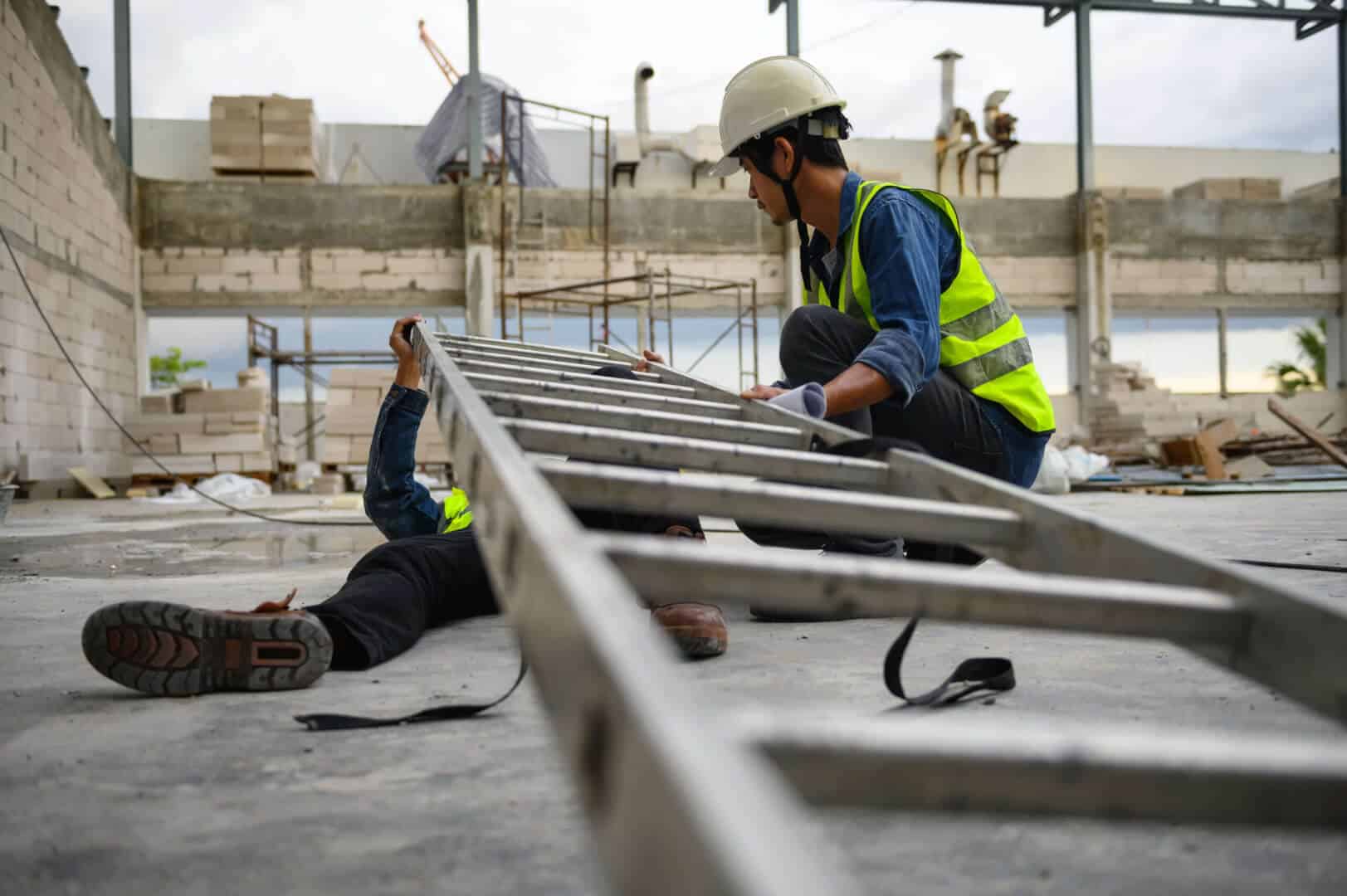
Common Types of Ladder Accidents
By far, the most common ladder-related injury is falling from one, but that is not the only injury that can occur because of or around ladders. For instance, injuries sometimes occur because someone drops an object while on a ladder or an object falls off (like a bucket of paint set on a ladder tray) and strikes someone beneath it. Moving a ladder can also cause an object to fall if the ladder becomes unbalanced or if the person moving it knocks it into something else.
Ladders can also fall and hit people if they are improperly set, knocked into, or subjected to strong winds. Another ladder injury that can occur is a twisted, sprained, or broken ankle or wrist, which may also contribute to a fall. Injuries sometimes occur while storing or transporting ladders as well.
The Most Common Reasons for Ladder Accidents
Ladder accidents occur for any number of reasons from clumsiness to improper footwear to using them improperly and everything in between, but most ladder accidents occur due to one of three broad reasons:
- Frequent Handling– Extension ladders are heavy, and even taller stepladders can be challenging to carry and move around. The more one is handling heavy equipment such as a ladder, the more likely a strain or sprain will occur due to tripping, stumbling, becoming fatigued, etc. On the bright side, these injuries are usually not very serious.
- Not Using the Right Ladder for the Job– This more frequently happens to residents because the ladder they have isn’t suited for the job but they try to make it work, anyway. However, it can also happen to workers who are being careless or cutting corners. Frequent causes are using a ladder that’s too short, climbing on the top rung, or leaning a stepladder against a wall like an extension ladder. Falls are the most frequent injuries that ensue, and the consequences can be severe.
- Overreaching and Then Falling– Anyone who’s ever been up on a ladder, knows that you frequently have to climb back down and move the ladder so you can reach the next spot. That can get old, and as a result, people sometimes give in to the temptation to reach out too far. Straining a muscle, ligament, or joint might result, but by far the more common and much more serious injury is a fall. As the person reaches out past the recommended safe zone, the ladder can become unbalanced, making it tip over to the side. The risk for this increases dramatically the taller and therefore the less stable the ladder is and when the surface beneath the ladder is uneven, which frequently is the case in outdoor situations. Using levelers can help in the latter scenario, but the real problem is the overreaching; levelers cannot fix that.
Ways To Prevent Ladder Accidents With the Right Ladder Safety Equipment
So now that we understand why ladder accidents occur, let’s look at ways to prevent them. Not all of these may apply to every situation, but it’s worth knowing all of them.
- Use the right ladder for the job and have proper footwear. Shoes or boots should support the ankles and have a good grip.
- Make a safety checklist and go over it before every use. One convenient way to do this is to print the checklist and attach it to both sides of the ladder.
- Inspect ladders on a regular basis. Ladders, especially metal ones, are typically extremely durable and can last for years and years, but that doesn’t mean they’re infallible. Look for bent and broken steps, rot on wooden ladders, cracks, and other visible defects before using them.
- Provide and require ladder safety training. Working on a ladder is dangerous, and none of your employees should be without proper safety training, online or in person if they’ll be on or around ladders. Workers would also benefit from looking into ladder and climbing safety training.
- Learn (and teach) how to climb a ladder properly. To reduce the chance of slips and falls, there should always be at least three points of contact when on a ladder. Always climb with both feet facing forward. Never stand on the top rung; in general; avoid being on other upper rungs if possible.
- Know the proper positioning angle. When placing a ladder against a wall, the four-to-one rule helps you get the angle right. For every four feet the ladder is going up, its base should be set one foot back.
- Invest in ladder safety equipment. Levelers help when the surface is uneven. Ladder stabilizers are permanent installations that can help prevent slips and tipping. A ladder grab is a bar that provides a stable grip for anyone ascending or descending a ladder. Cable safety sleeves can free both hands for climbing and lock up if a ladder climber falls. Lanyards keep tools and other objects from falling and landing on other people or damage-prone surfaces.
Ladder safety pairs naturally with other workplace safety practices, and the same attention to hazard prevention applies to understanding why accidents happen in the first place. At Formetco, our hardware division carries the above ladder safety equipment and other products that help keep you and your workers safe. Come see what we have and how it can take some of the danger out of climbing a ladder. Reduce the risks! Give us a call now at (800) 367-6382 or send us a message on our online form.
Stay tuned to the Formetco blog for more on ladder safety equipment. Read more of Formetco’s coverage on ladder safety equipment and related topics.